
A Story That Might Feel Familiar
What Is a Situationship?
Have you ever been talking to someone every day, going on dates, sharing personal things, and feeling like you are basically in a relationship but you have no idea what you actually are?
You talk in the morning, text late at night, meet when you can, and sometimes act like a couple. They care about you, remember small things about your life, and make you feel special. But when someone asks, “Are you two together?” you don't know what to say.
Maybe you have even asked them, “What are we?” and received answers like, “Let's just see where this goes,” “I like you, but I'm not ready for a relationship,” or “Why do we need a label?”
If this sounds familiar, you may be in a situationship.
So, what is a situationship? In simple words, it is a romantic or emotional connection that feels like a relationship but does not have a clear label, commitment, or direction. You may have feelings for each other, but you may not have agreed on what the connection actually means.
A situationship is not automatically bad. Some people are comfortable with casual or undefined relationships. The real problem starts when both people want different things for example, when one person wants commitment while the other wants to keep things casual.
Situationship Meaning: What Does It Actually Mean?
The situationship definition is simple: it is an undefined romantic relationship where emotional or physical closeness exists without clear commitment, expectations, or future plans.
A situationship often has the following features:
There is emotional or physical intimacy.
The connection feels romantic.
There is no official relationship label.
Both people may avoid talking about commitment.
The level of effort may change from day to day.
There may be no discussion about exclusivity.
Future plans are missing or unclear.
One or both people feel confused about the connection.
A normal friendship usually has clear boundaries. A committed relationship also has some level of agreement, even if every relationship looks different. A situationship stays in the middle. It can feel close enough to create strong emotions but unclear enough to create doubt.
This is why situationships can be emotionally difficult. You may receive affection, attention, and closeness, but you may not receive security, consistency, or honesty about the future.
A Real-Life Example of a Situationship
Maya met Arjun at a friend's birthday party. They exchanged numbers and started talking the next day. At first, it was just casual conversation. But within a few weeks, Arjun became part of Maya's daily routine.
He texted her good morning, asked how her day was going, remembered small details about her work, and sent her funny videos when he knew she was stressed.
Soon, they started meeting regularly. They went for dinner, watched movies together, and spent weekends with each other. They were emotionally close, and Maya slowly started developing feelings.
To Maya, it felt like a relationship.
But there was one problem: they had never actually talked about what they were.
When friends asked, Arjun said, “We're just seeing where things go.”
Some days, Arjun was caring and affectionate. Other days, he disappeared for two or three days. He would cancel plans at the last minute and then come back with a sweet message as if nothing had happened.
Finally, Maya asked, “Are we exclusive?”
Arjun replied, “Why are you putting so much pressure on this?”
When she asked where the connection was going, he said, “Let's just enjoy what we have right now.”
Maya was stuck. She liked him, but she didn't know if he wanted the same future she did. She was getting enough attention to stay hopeful, but not enough clarity to feel secure.
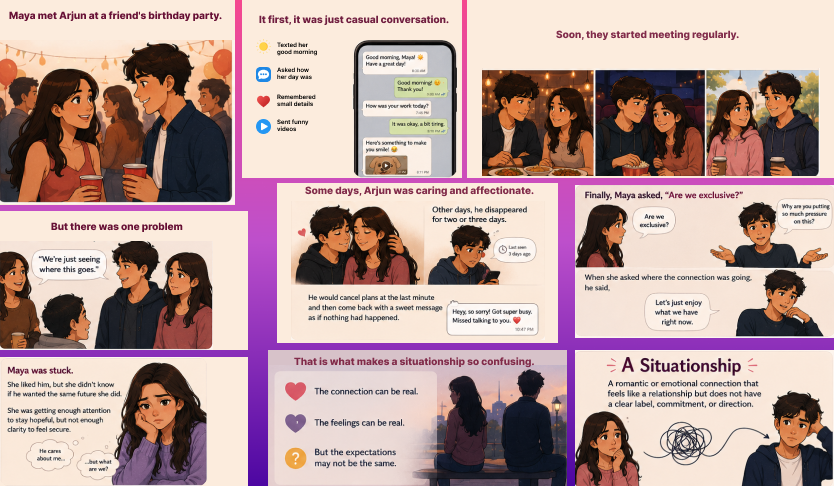
That is what makes a situationship so confusing. The connection can be real. The feelings can be real. But the expectations may not be the same.
8 Signs You Are in a Situationship
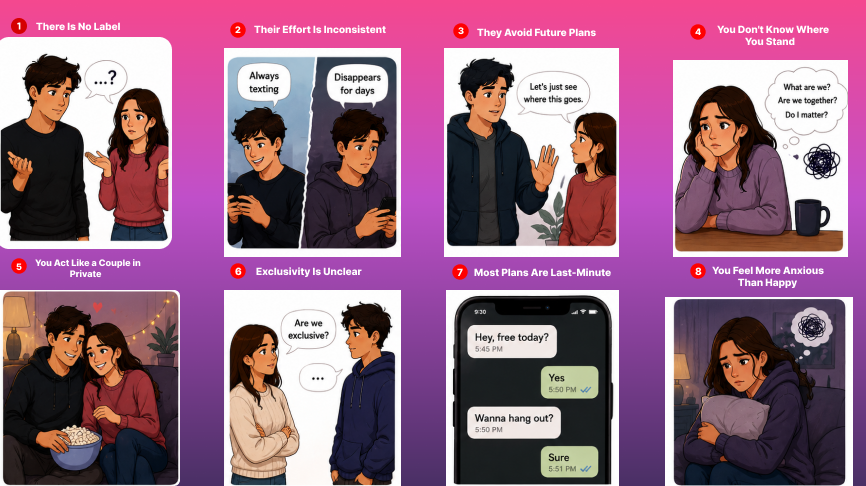
Every undefined connection is different, but some signs appear often. If several of these signs describe your connection, you may be in a situationship.
1. There Is No Label
2. Their Effort Is Inconsistent
3. They Avoid Future Plans
4. You Don't Know Where You Stand
5. You Act Like a Couple in Private
6. Exclusivity Is Unclear
7. Most Plans Are Last-Minute
8. You Feel More Anxious Than Happy
Why Do People Enter Situationships?
People enter situationships for different reasons. Sometimes, both people want something casual. In other cases, one person wants commitment while the other person wants emotional closeness without responsibility.
Common reasons include:
Fear of Commitment
Some people enjoy connection but fear the responsibility or vulnerability of a committed relationship. They may have experienced heartbreak, betrayal, or a difficult relationship in the past.
Instead of being honest about their fear, they may keep the connection undefined.
Not Being Emotionally Ready
A person may be recovering from a breakup, focusing on personal problems, or dealing with emotional stress. They may like you but not have the emotional energy for a serious relationship.
This does not make them a bad person. However, their situation may still be unsuitable for your needs.
They Want Freedom Without Commitment
Some people prefer casual dating and do not want exclusivity. They may enjoy companionship while keeping the freedom to meet other people.
There is nothing wrong with wanting a casual connection when everyone understands and agrees. The problem occurs when the expectations are hidden or unequal.
They Like the Benefits Without the Commitment
A situationship can provide companionship, attention, intimacy, and emotional support without the work of a committed relationship. One person may enjoy these benefits while avoiding responsibility.
If you feel that someone only comes to you when they are lonely, bored, or interested in physical intimacy, pay attention to that pattern.
Different Relationship Goals
Two people may genuinely like each other but want different things. One may want marriage and stability, while the other may want casual dating. One may want exclusivity, while the other may want an open dating life.
Is a Situationship Bad?
Not necessarily. A situationship is not automatically unhealthy. It depends on whether both people understand what the connection is and genuinely feel comfortable with it.
A casual, undefined connection may work when:
Both people want the same type of connection.
They communicate honestly.
They respect each other’s boundaries.
They discuss physical and emotional expectations.
They are honest about dating other people.
Neither person is being pressured or misled.
Both people can leave without feeling used or trapped.
A situationship becomes unhealthy when one person wants more but stays silent out of fear. It can also become unhealthy when someone uses vague words to receive emotional or physical benefits without offering honesty or care.
Emotional Effects of a Situationship
Situationships can feel exciting at the beginning. There may be chemistry, mystery, freedom, and strong emotional moments. Over time, however, the uncertainty can affect your mental and emotional health.
You may experience:
Anxiety when the person does not reply.
Overthinking every conversation.
Fear of asking for more.
Jealousy without the right to express it.
Low self-confidence.
Emotional dependence.
Difficulty trusting the person.
Sadness after periods of distance.
Confusion about whether to wait or move on.
Feeling unwanted or unimportant.
For example, you may spend the whole day wondering why they haven't replied, then feel relieved when they finally message you at night. The next day, they may be affectionate again, and you start feeling hopeful. This cycle of distance and attention can make it difficult to understand how you really feel about the connection.
Situationship vs Relationship
The main difference between a situationship and a committed relationship is clarity and mutual commitment. In a situationship, there is usually no clear label, expectations may remain unspoken, and effort can be inconsistent. Future plans and exclusivity may also be unclear, which can make communication confusing and emotional security harder to maintain.
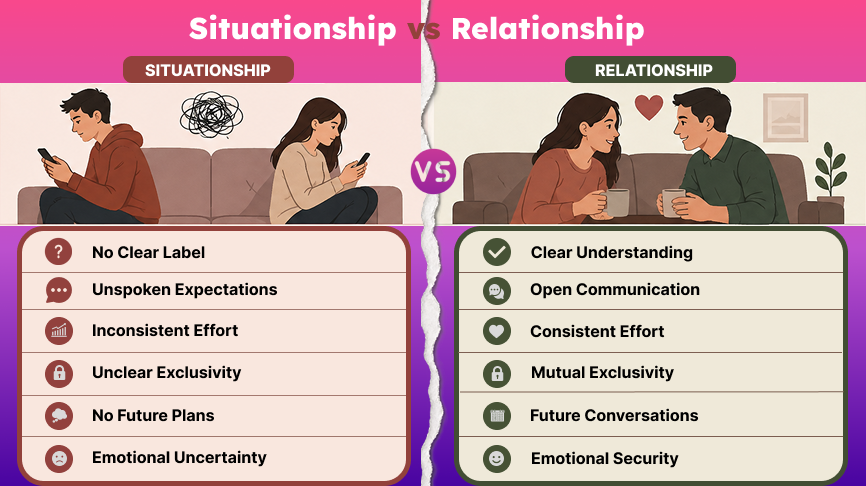
In a committed relationship, both people usually have a clearer understanding of what they are. They discuss expectations, communicate about exclusivity, make more consistent efforts, and often talk about the future. This does not mean every committed relationship is perfect, but there is usually more shared understanding and emotional security.
Situationship vs Friends With Benefits
A situationship and a friends with benefits connection can look similar, but they are not exactly the same.
A situationship usually has romantic or emotional feelings along with unclear commitment. You may go on dates, talk every day, care about each other's personal lives, and act like a couple without officially being one.
A friends with benefits connection is usually more focused on physical intimacy while keeping the relationship casual. There may be friendship and attraction, but romantic commitment is not necessarily expected.
Of course, every connection is different. The important thing is not the label itself but whether both people understand and agree on what they are doing.
How to Ask for Clarity in a Situationship
If you are starting to feel confused about your connection, you don't have to guess what the other person wants. Instead of making assumptions or starting an argument, choose a calm moment and have an honest conversation about how you feel.
You could say:
I really enjoy spending time with you, and our connection has become important to me. I’d like to understand how you see us and whether you want this to become something more serious.
You can also ask simple and direct questions, such as:
“How do you see our connection?”
“Are you looking for something exclusive?”
“Are you currently dating other people?”
“What are you looking for right now?”
“Do you see this becoming a serious relationship?”
“What does commitment mean to you?”
The purpose of this conversation isn't to pressure someone into giving you the answer you want. It is about understanding whether you both want the same thing.
Also, pay attention to both their words and their actions. Someone may say they care about you, but if they repeatedly avoid honest conversations, disappear without explanation, or refuse to discuss what they want, their behavior may tell you more than their words.
What to Do If They Do Not Want Commitment
If the other person clearly says they do not want a committed relationship, believe them.
Don't treat their answer as a temporary situation and assume they will eventually change their mind. People can change their minds, but you should make your decision based on what they are offering you now not on the hope that they may change later.
You have several choices:
Continue the connection if it genuinely suits your needs.
Set clear boundaries around communication and intimacy.
Ask whether the connection is exclusive.
Reduce emotional or physical involvement.
Take space to protect your feelings.
End the situationship and move forward.
There is no shame in wanting a relationship. There is also no shame in wanting something casual. The important thing is to be honest with yourself.
How to Leave a Situationship
Leaving a situationship can be difficult because there may not be a formal breakup. You may even feel like you don't have the right to be hurt because the relationship never had a clear label. But your feelings are still valid. If the connection is making you feel confused, anxious, or emotionally drained, you have every right to step away.
You can leave by saying:
I've realized that this connection isn't giving me the clarity and consistency I need. I'm looking for a committed relationship, so I think it's better for me to step away.
You don't need to argue about whether the connection was real or convince the other person that your feelings are valid. If the situation no longer feels right for you, that is enough reason to leave.
After ending the situationship:
Avoid constantly checking their social media.
Don't accept repeated attention without seeing real changes in their behavior.
Spend time with friends and people who support you.
Return to hobbies, routines, and things you enjoy.
Remind yourself why you decided to leave.
Give yourself time to process your emotions.
Don't blame yourself for developing feelings.
You don't have to start dating someone new immediately after leaving a situationship. Give yourself time to process what happened and understand what you want from your next relationship. Think about what made you feel secure, what made you uncomfortable, and which boundaries you want to set in the future.
You may still miss the person after leaving, and that's completely normal. Missing someone doesn't always mean you made the wrong decision. Sometimes, it simply means the connection mattered to you.
Give Yourself Time to Move On
You don't have to start dating someone new immediately after leaving a situationship. Give yourself some time to understand what you learned from the experience and what you want in your next relationship. Think about what made you feel secure, what made you uncomfortable, and which boundaries you want to set in the future. Taking time for yourself can help you make healthier choices when you're ready to date again.
How to Avoid an Unhealthy Situationship
You cannot control whether another person is ready for commitment, but you can be clear about what you want. Communicating your needs early can help you recognize whether you and the other person are looking for the same kind of connection.
Try these steps:
Know What You Want
Before becoming deeply emotionally involved, ask yourself what you're actually looking for. Do you want casual dating, exclusivity, or a committed relationship?
You don't need to have your entire future planned out. But knowing your basic needs and boundaries can make it easier to recognize when someone isn't offering what you're looking for.
Discuss Expectations
Talk openly about communication, exclusivity, emotional support, and what each of you wants from the connection. These conversations may feel uncomfortable at first, but they can prevent confusion later.
For example, if you are looking for an exclusive relationship but the other person wants to keep dating casually, knowing that early can help you decide whether the connection is right for you.
Watch for Consistency
Don't focus only on chemistry, attention, or romantic words. Look at what the person actually does. Do they make time for you? Do they keep their promises? Do they respect your boundaries? Do they communicate honestly when something changes?
A person doesn't have to be perfect, but their words and actions should generally match.
Don't Ignore How You Feel
If you constantly feel uncertain about where you stand, don't keep telling yourself that everything is fine. Confusion that continues for weeks or months may be a sign that something needs to be discussed. Instead of overthinking every message or trying to guess what the other person means, talk openly about what you need.
Set a Personal Limit
Decide how long you're comfortable staying in an undefined connection. This doesn't mean giving someone an ultimatum or setting a deadline for them to commit. It simply means knowing how long you're willing to wait for the clarity and consistency you need.
If nothing changes after an honest conversation, you can choose to step away instead of staying stuck in the same cycle.
The goal isn't to avoid every uncertain connection. It's to recognize when a connection is no longer meeting your needs and have the confidence to choose what is right for you.
Frequently Asked Questions About Situationships
What is a situationship in simple words?
A situationship is a romantic or emotional connection that feels like a relationship but does not have a clear label or commitment. You may talk regularly, go on dates, or have strong feelings for each other, but you may not know where the connection is going.
What are the signs of a situationship?
Common signs include no clear relationship label, inconsistent effort, unclear exclusivity, last-minute plans, avoiding future conversations, and feeling confused about where you stand. If you regularly feel like you are in a relationship but cannot clearly explain what the relationship is, you may be in a situationship.
Can a situationship turn into a relationship?
Yes, it can. A situationship can become a committed relationship when both people openly discuss what they want and agree to move forward together. However, don't assume that someone will eventually want commitment. Look at their actions and have an honest conversation about what they want now.
Is a situationship healthy?
It can be healthy if both people genuinely want the same type of connection, communicate honestly, respect boundaries, and understand whether they are exclusive. It can become unhealthy when one person wants commitment while the other avoids clarity or when the connection regularly causes stress and anxiety.
How do I ask someone if we are in a situationship?
Choose a calm moment and explain how you feel instead of blaming them. You can say, “I enjoy spending time with you, but I want to understand what this connection means to you.” Then ask whether they want something casual, exclusive, or more serious.
How do you end a situationship?
Be honest and clear. You can say, “I have realized that this connection isn't giving me the clarity and consistency I need, so I think it's better for me to step away.” You don't need to argue or prove that your feelings are valid. Give yourself space afterward and avoid returning to the same cycle without a real change.
A situationship can feel exciting, comfortable, and even meaningful but uncertainty can become difficult when you want more clarity. The important thing is to understand what you want and whether the other person wants the same thing.
You don't need to rush into a relationship, but you also don't have to stay in a connection that constantly leaves you confused. Talk honestly, watch for consistency, set boundaries, and pay attention to how the relationship makes you feel.
If you keep asking yourself, “What are we?” it may be time to have an honest conversation.